

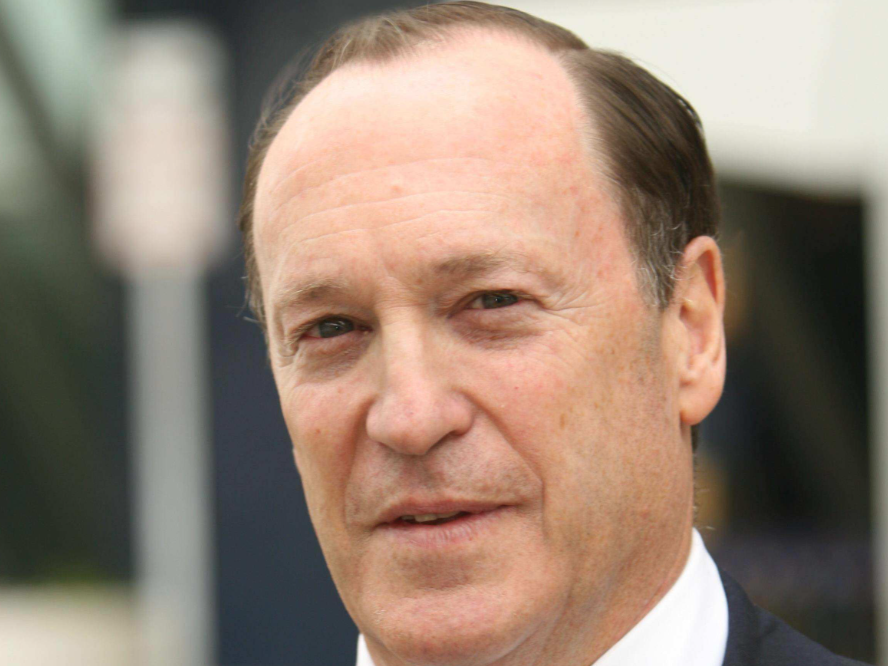
Newsguard co-founder Steven Brill says “the death of truth” and doing something about it is the thing which keeps him up at night.
The former editor launched independent publisher rating and fact-checking service Newsguard in 2018 and has just launched what claims to be the world’s first chatbot for breaking news trained on some 12,000 reputable sources.
He answered Press Gazette’s questions about what he has learned during his near 50-year career in news and publishing.
How are things going right now, what’s working?
Things are going great. We just launched NewsGuard AI and one of the things we’ve been reading [are] your stories in the Press Gazette, which I love. As someone who, in another lifetime, started a magazine that was very popular for a while, called Brill’s Content, which was about the press in the United States, I’m sort of an afficionado of press trade publications, and yours is by far the best. In fact, it’s sort of stunning to me that you cover media in the United States better than any US publication.
One of the effects that Press Gazette has had on NewsGuard AI is that, as we were planning it and designing it, we have been meticulously designing it to comply with all of the SPUR requirements. In terms of reporting, we are sharing all the revenue with the publishers whose content we use, we are prominently citing the publishers, we’re not quoting them verbatim, but we’re prominently citing them when we provide an answer, and we’re also recruiting lots of them.
The theory of our case, at NewsGuard AI, is that people who already pay for online content, who already subscribe to the FT or the Denver Post, whatever it is, are the people who appreciate quality content. Therefore those are the people who will most appreciate what NewsGuard AI is doing, which is only consulting the 12,000 sources we have rated as reliable, and using, as guardrails, the 64,000 examples of provably false claims online, so that NewsGuard AI never repeats them, so we don’t hallucinate.
We’ve gotten a really good reception so far. It’s been a great month, and it’s great to see that we were able to pull it off.
Do you have any concerns around AI and the future of journalism?
Totally. That’s why we started NewsGuard AI. We’ve audited the LLMs, and in addition to stealing everybody’s content, 33% of the time if you ask them about any of the provably false claims that we’ve identified, they repeat those claims. That’s because the Russians in large part, and other malignant actors, have infected the LLMs by bombarding them with phoney articles.
To give you an example, back at the beginning of the Ukraine War, the Russians produced 36 million articles about Ukrainian corruption…As a result, it infected the internet.
NewsGuard AI is meant to be an antidote to that. We think that’s good for consumers, and we know it’s good for publishers, because the publisher’s content will be cited, and the publishers will be paid for it.
What was the big turning point/breakthrough moment for you?
A pivotal moment was, about 20 years ago now, I got a call from a woman who began the conversation by saying, Mr Brill, what are you doing to my daughter? And I said, what do you mean? And she said, well, she’s a junior at Yale, and she just got accepted into your journalism programme. She had an internship at an investment bank, and now you’ve lured her into a dead-end profession, and she has these student loans that she has to pay. And I really didn’t have a very good answer for her.
I thought about it, and the next day, I made an appointment to go see Arthur Sulzberger, who was the publisher of The New York Times. I told him that story, and he said, why are you telling me that story? And I said, because you’ve ruined it for everybody. The New York Times is free online. It shouldn’t be free online, because if it’s free online, it destroys the economics of journalism. Long story short, that caused me to start something called Press Plus which was the first software company that enabled online newspapers to charge for their content using a meter. I also reached out to my now partner, Gordon Krovitz, who was the publisher of the Wall Street Journal, which was distinguished as the only online publication that was already charging for its content. He and I started this company, and the first year, we convinced eight newspapers to charge for their online content using a metre, and by the second year, it was up to 900.
What’s currently keeping you up at night?
Well, the biggest worry, as we’re now raising more money to go out and market NewsGuard AI, is, does anybody care anymore about what’s reliable? I wrote a book a year and a half ago called The Death of Truth, which is really about that.
I think a lot of people do care but I think they’ve been taught that they shouldn’t care, because ‘there’s nothing they can do about it.’ But there is something that we can do about it. If journalism can be distinguished from all the slop that’s out there, and if people will pay a modest sum for it, we can get back to a place where people are relying on the truth.
I actually believe that there is such a thing as truth. There is such thing as facts. What journalists do is they separate opinions from facts. Opinions are all good, everybody should have opinions, but journalists inject the facts into the kinds of debates that people with opinions have. I think that what keeps me up at night is the frustration that when I talk to people about NewsGuard AI, they say, how can you be the arbiters of truth?
We run a feature in our Reality Check newsletter called Reality Gap, where every month we take three or four, prominent, provably false claims and we do a survey with Yougov to ask how many people believe it. For example, of the three assassination attempts on President Trump, something like a third of all Americans believe at least one of them is staged. That’s terrible. That should keep everybody up at night.
What has been your proudest achievement?
Whenever I’ve written a major story or a book that really changes things and has impact, that’s a source of pride. Whether it’s the effect I’ve had on the legal industry in the US and around the world, or the effect I’ve had on getting people to focus more on the ridiculous cost of healthcare, and how we can fix it, and now, getting people to really focus on what we can do about how social media companies and AI companies which are perverting the notion that there can be reliable information that people can believe.
What was your biggest mistake, and what did you learn from it?
When I started a magazine called Brill’s Content, which was a media magazine, it started with a big splash, did very well at the beginning, but I didn’t really think through the business model as clearly as I should have. I should’ve have taken more time to think that through, which is why it failed. I really hadn’t figured out the advertising piece of it. If I started it now, I think I would do it more carefully and do it the way we’re doing NewsGuard AI, which is really counting on reader revenue as opposed to advertising revenue.
When it comes to leading a team, motivating others, what works for you?
I tend to push people very hard, to the extent that I’ve made the mistake, especially early on, that sometimes I push people too hard. I think most of the people who I’ve trained would tell you that it’s a good thing. But I’ve learned and need to keep learning the difference between pushing people hard and insulting people with criticism. When you insult them, it’s more memorable, but it’s probably not the most constructive way to do it.
Who or what inspires you and why?
Other really good journalists inspire me. Whether it’s Bob Woodward, who’s a friend of mine, who co teaches one of my seminar sessions at Yale, or some of my younger alumni who either worked for me at the American Lawyer, or other places, or have gone through my seminar at Yale and become very successful journalists. Jill Abramson, who was the editor of The Times, or Steve Adler, who was the editor of Reuters – it’s a whole list of older people like that, as well as younger people who now have bylines all over the pages of major publications around the world. That really makes me feel good, that there’s this whole network of people out there that I’ve had something to do with training.
Interview answers edited for clarity and length.
Email pged@pressgazette.co.uk to point out mistakes, provide story tips or send in a letter for publication on our "Letters Page" blog
